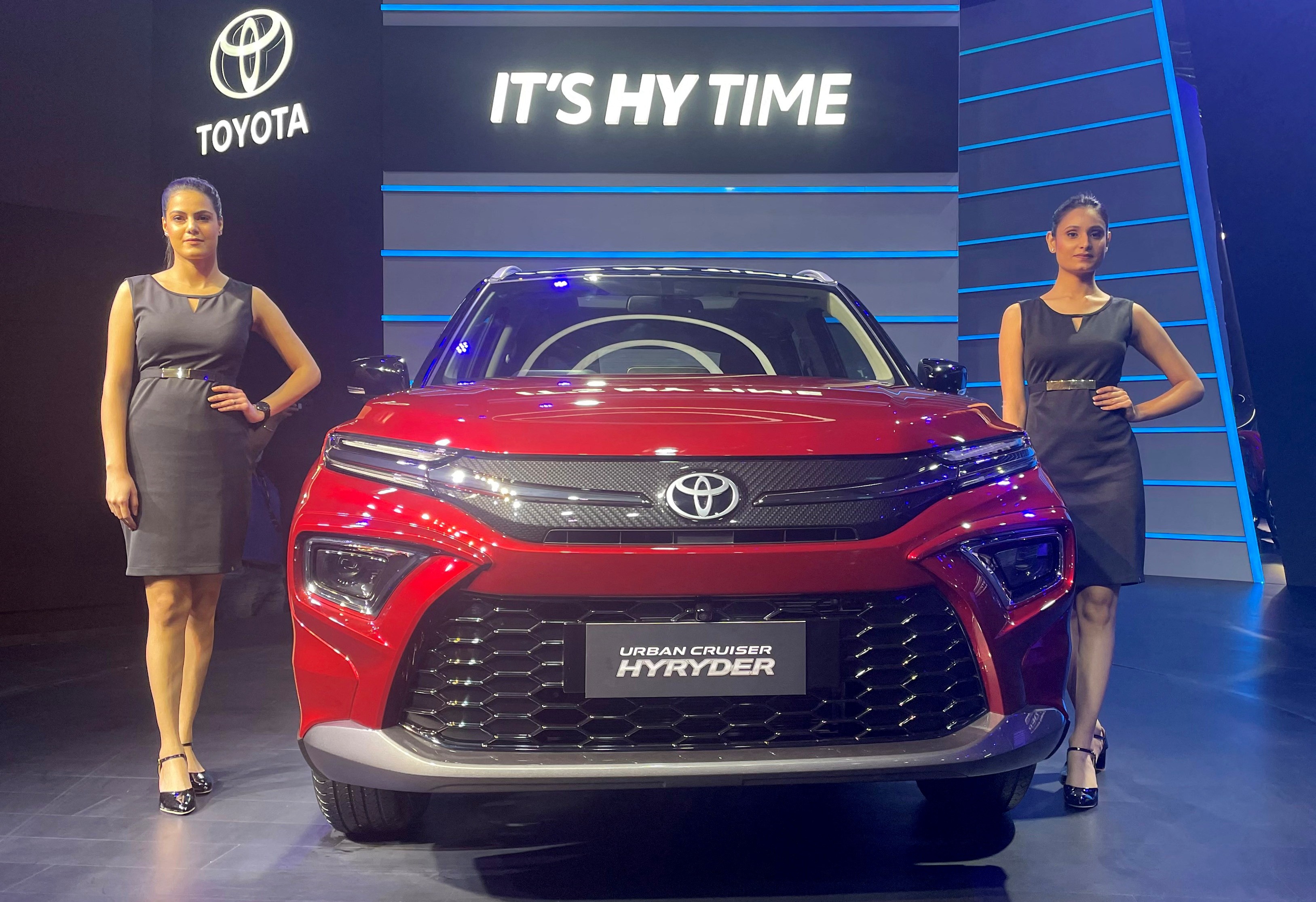
India’s car market is taking a different path from the one dominating the global EV narrative. While battery-powered vehicles continue to attract most of the attention worldwide, Indian consumers are increasingly preferring hybrids, especially models that do not require external charging. That shift is helping Japanese automakers reinforce their already powerful position in one of the world’s most important growth markets.
The trend matters because India is now the world’s third-largest auto market, and the technology mix that takes hold there will shape global strategy for years to come. For now, the market is not moving decisively toward pure EVs. Instead, many buyers appear to prefer a more gradual transition, choosing hybrids that offer better fuel efficiency without requiring changes to refueling habits or daily routines.
Industry forecasts suggest hybrids could account for about 10% of passenger vehicle sales in India by the financial year ending March 2027, compared with roughly 5% for EVs. That difference says a great deal about how Indian demand is developing under local conditions, where affordability, convenience, and infrastructure still carry more weight than the global marketing appeal of full electrification.
Hybrids are outpacing EVs in the passenger car market
Hybrid sales have risen sharply in recent years. In the financial year ending March 2026, they reached 362,866 units, up from 98,010 in the year ending March 2020. EV sales also increased, but remained much lower at 131,865 units.
That gap is notable because the Indian market still has far fewer hybrid models than EV offerings. Even with a limited lineup, hybrids have gained traction quickly, suggesting that their appeal comes less from product variety than from the practicality of the technology itself.
For many buyers, hybrids solve an immediate problem. They lower fuel consumption and improve efficiency, but they do not require drivers to rely on charging networks. Owners can continue refueling at petrol stations as usual. That makes hybrids an easier next step for consumers who want better mileage but remain wary of range limits, charging access, or uncertainty around long-term resale values.
This has become especially relevant for buyers moving away from diesel vehicles. For that group, hybrids often look like the most practical replacement because they preserve convenience while improving running costs.
Japanese brands are in the best position to benefit
The clearest beneficiaries so far are Japanese carmakers, especially Toyota and Maruti Suzuki. Models such as the Toyota Innova Hycross and the Maruti Grand Vitara have helped define India’s hybrid market. That matters because these companies already hold strong positions in the broader market through their conventional vehicle businesses.
In other words, hybrids are not opening the door mainly for new disruptors. They are reinforcing the incumbents that already understand Indian pricing, distribution, and consumer preferences. Maruti Suzuki remains the dominant force in the market overall, while Toyota’s local business is also seeing hybrids become a more meaningful part of its sales mix.
That creates a powerful advantage. In some markets, electrification gives challengers a chance to break established hierarchies. In India, the rise of hybrids may instead strengthen the companies that were already leading.
Why global EV leaders have not broken through
The hybrid shift also helps explain why large global EV brands have struggled to gain traction. Despite their global prominence, Tesla and BYD remain small players in India. High import duties, limited local scale, and a weaker fit with India’s price-sensitive market have all held them back.
Even within India’s EV segment, the leading names are still domestic manufacturers such as Tata Motors and Mahindra & Mahindra, both of which built their strength in conventional vehicles first. That stands in contrast to the global EV market, where BYD and Tesla have set the pace.
The lesson is that India is not following the same adoption pattern seen in China, Europe, or parts of the United States. Local infrastructure, ownership economics, and consumer behavior are producing a different transition curve, one that currently favors hybrids over pure battery vehicles.
More hybrid launches could extend the trend
Analysts expect more hybrid launches over the next year than in the previous several years combined. Hyundai, Kia, Renault, Honda, and Maruti Suzuki are all expected to introduce new hybrid models in India.
That matters because a wider range of offerings could accelerate adoption further at a time when consumer awareness and acceptance are already improving. If charging networks remain uneven and affordable EV choices stay limited, hybrids may continue to look like the more practical option for a large share of buyers.
India’s auto transition is taking its own route
India appears to be opting for a staged transition rather than a direct jump to full electrification. That may frustrate the ambitions of some global EV players, but it makes commercial sense in a market where total ownership cost, infrastructure readiness, and resale confidence remain central to purchase decisions.
Japanese automakers are emerging as the clearest beneficiaries of that reality. By offering cars that improve fuel efficiency without demanding a major behavioral shift, they are tightening their grip on India’s car market at a time when many expected electrification to weaken incumbent advantages. Unless charging access improves more quickly and imported EVs become significantly more affordable, hybrids may remain the more compelling choice for a large share of Indian consumers.